Zarmina Nasir
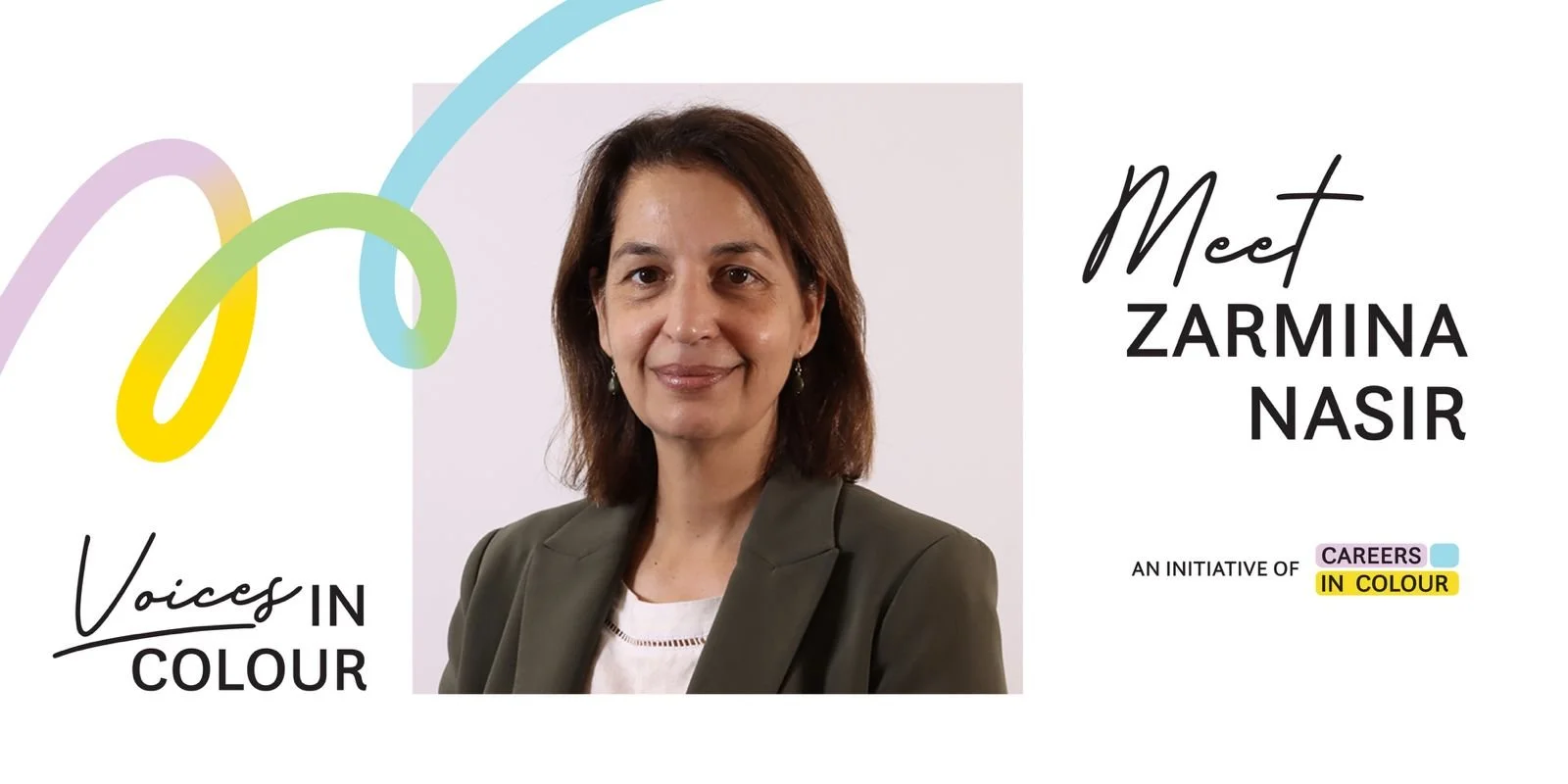
Voices in Colour is a storytelling series by Careers in Colour, grounded in the belief that every career carries a story. Through these conversations, we spotlight the voices, experiences and insights of People of Colour (POC) navigating the workplace.
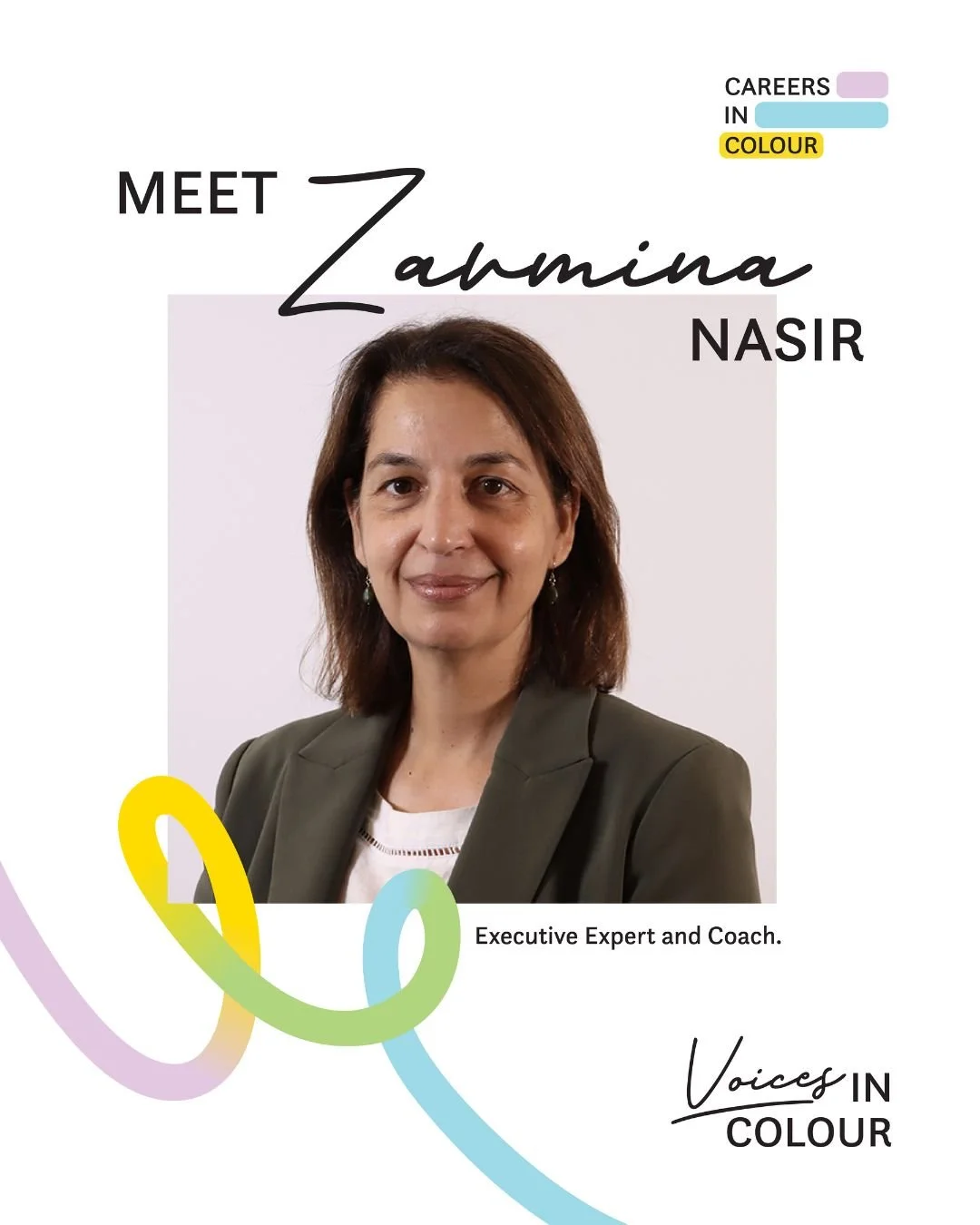
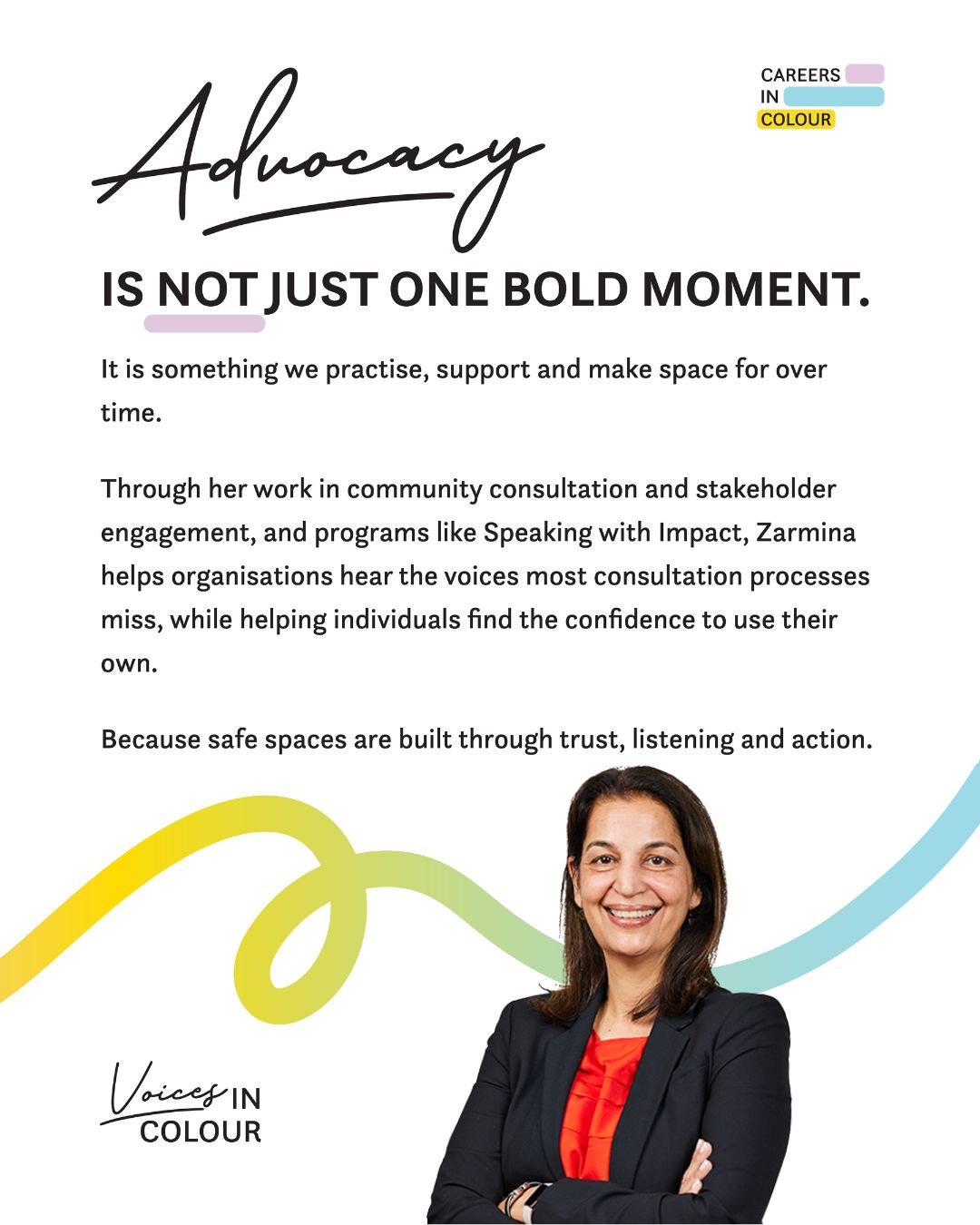
In this Voices in Colour profile, we're excited to spotlight Zarmina Nasir, Executive Expert and Coach.
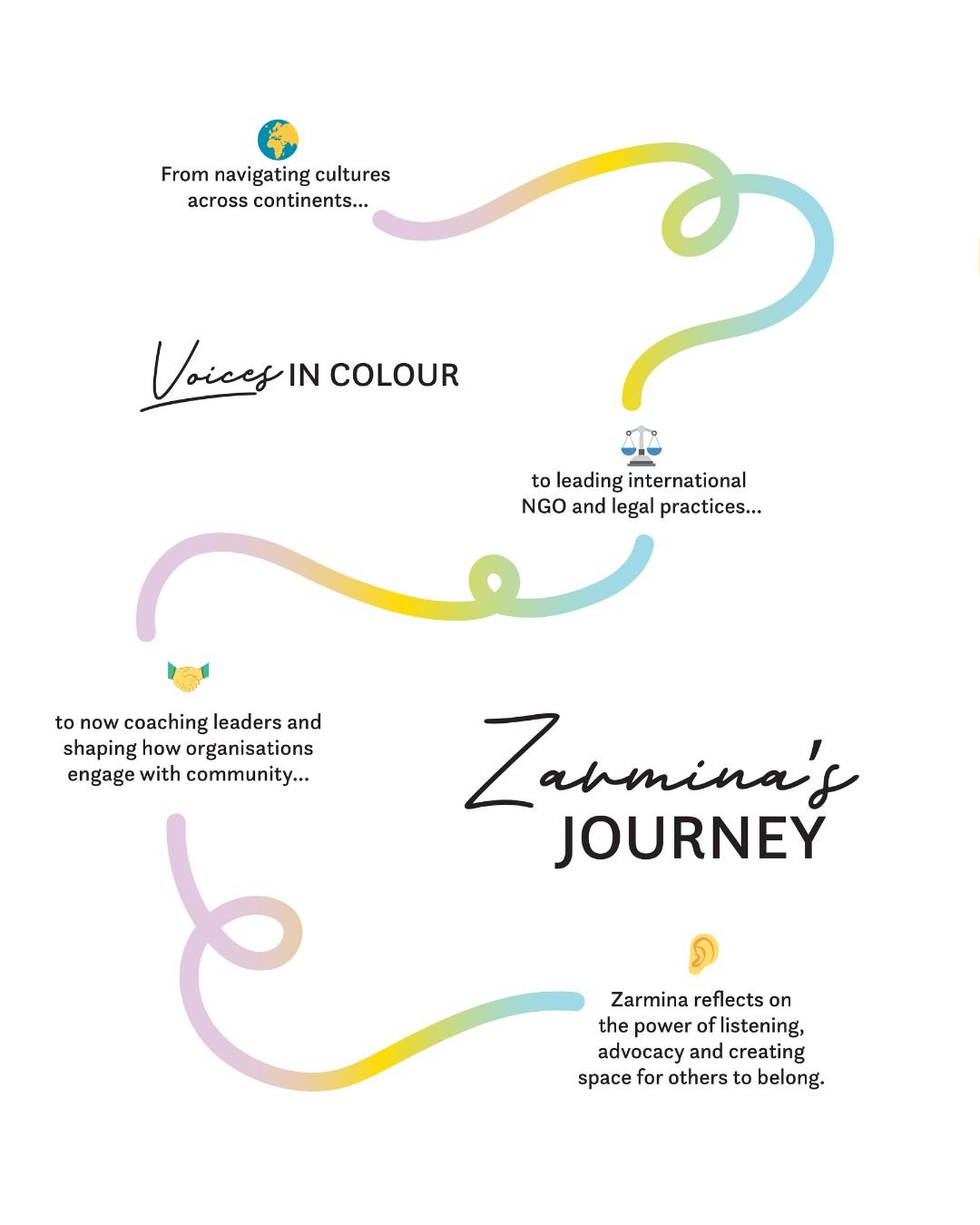
From leading international law practices to driving global campaigns on gender equity and women's economic empowerment, Zarmina's career spans two decades across business, NGO and cultural settings with a view that we all can play a part in building the conditions for people to thrive. Now working as an executive coach and strategic advisor, she brings that same focus closer to home, partnering with communities, philanthropic organisations and leaders who are shaping a more equitable world.
You grew up moving around the world as the daughter of a diplomat. What was that experience like, and how did it shape who you are today?
I've had a very privileged life, I think, in so many ways. My dad was a diplomat, so we went everywhere. As a young kid, having to keep changing schools had its challenges, but it gave me something I didn't fully understand until much later: a deep sense of how different cultures negotiate, communicate, what they value, what they don't.
It also made me used to being the other. Always a little on the outside, not 100% belonging. Even when I'd technically go home to Pakistan, I still had that insider-outsider view. It took me until adulthood to stop seeing that as a problem. Once I embraced it, I realised it had actually made me adaptable, resilient, and a really good listener. When you're always slightly uncomfortable, you pay closer attention to what people are saying.
You've moved between humanitarian work, the international NGO sector, leading a law firm, and now executive coaching. That's a career that doesn't follow a straight line. How do you make sense of it?
I've started saying recently that I'm retraining my brain. For a long time, I genuinely couldn't explain my CV. How do I tell the rest of the world what I'm doing in Australia? How do I tell Australia what I've been doing overseas?
But it has pulled together. Whether I was doing community development work in a remote area affected by a humanitarian crisis, or leading a commercial law practice, or consulting on government community engagement here, the theme is the same: understanding people's needs and making sure they're not just included, but actively involved.
When I first migrated to Australia, I craved stability. I took the first good job that came, at CARE Australia, and I stayed for nearly nine years. My colleagues told me later they assumed I'd leave within six months once I understood my market value. I didn't. But that experience taught me something I share often now: don't wait too long to put your hand up. It took one person saying to me, "What are you waiting for?" before I started doing it.
Your current work at Communication Link focuses on community consultation and stakeholder engagement. What does that work actually involve?
We support government and private organisations rolling out initiatives that require genuine public consultation. That means understanding who you're talking to before you talk to them, designing the right engagement activities, making sure you're not just capturing the loudest voices.
There's a real risk in community consultation of missing the quieter voices, the outliers. We're always watching for that. As part of our training stream, we run courses on media, communication and AI, and our newest program is one I've developed called Speaking with Impact. It came from organisations asking whether we had public speaking support for people for whom English is a second language.
We turned that on its head. Because Australia is incredibly multicultural, and the research shows the more you listen to different accents, the more your brain adapts to them. We're designing the course for everyone: students, senior public servants, anyone who wants to communicate with more confidence and presence.
You mentioned earlier that the feeling of being "other" shaped your resilience. But it doesn't always feel like a strength in the moment, especially in the workplace. Did you experience that tension in your own career?
Absolutely. When I migrated and wanted to grow in my career, overseas postings counted enormously for progression. I was a single mum with two small kids and no family in Australia. And I didn't find my voice to say that, not straight away.
There was also a very male, non-diverse structure around me. But I kept gently raising it. And eventually, people listened. What I took from that is that advocacy in the workplace doesn't always look bold. Sometimes it looks like consistently and quietly naming something until it gets heard.
I also think safe space matters enormously and it's not just about you. It's a two-way mechanism. You get bolder and more confident, and the people around you need to be enabling that. When I became a leader, I tried to be that person for others.
What does creating that safe space look like for you in practice, as a leader and as someone who trains and coaches others?
The first thing is making sure people don't have to ask for what they need. I check policies, and where I can, I improve them, and communicate them clearly and repeatedly. I remind people to take time off. I talk about my own life openly, going to pick up my dog, leaving early, because if people see me doing it, they'll feel like they can too.
On the cultural side, I've become much more intentional about calling things out. Not in a confrontational way, but clearly. Something doesn't have to be intended to cause harm to still need addressing. Early in my career I was told I couldn't be used for media because my accent wouldn't resonate with Australians. I don't think it was meant unkindly. But it needed to be named.
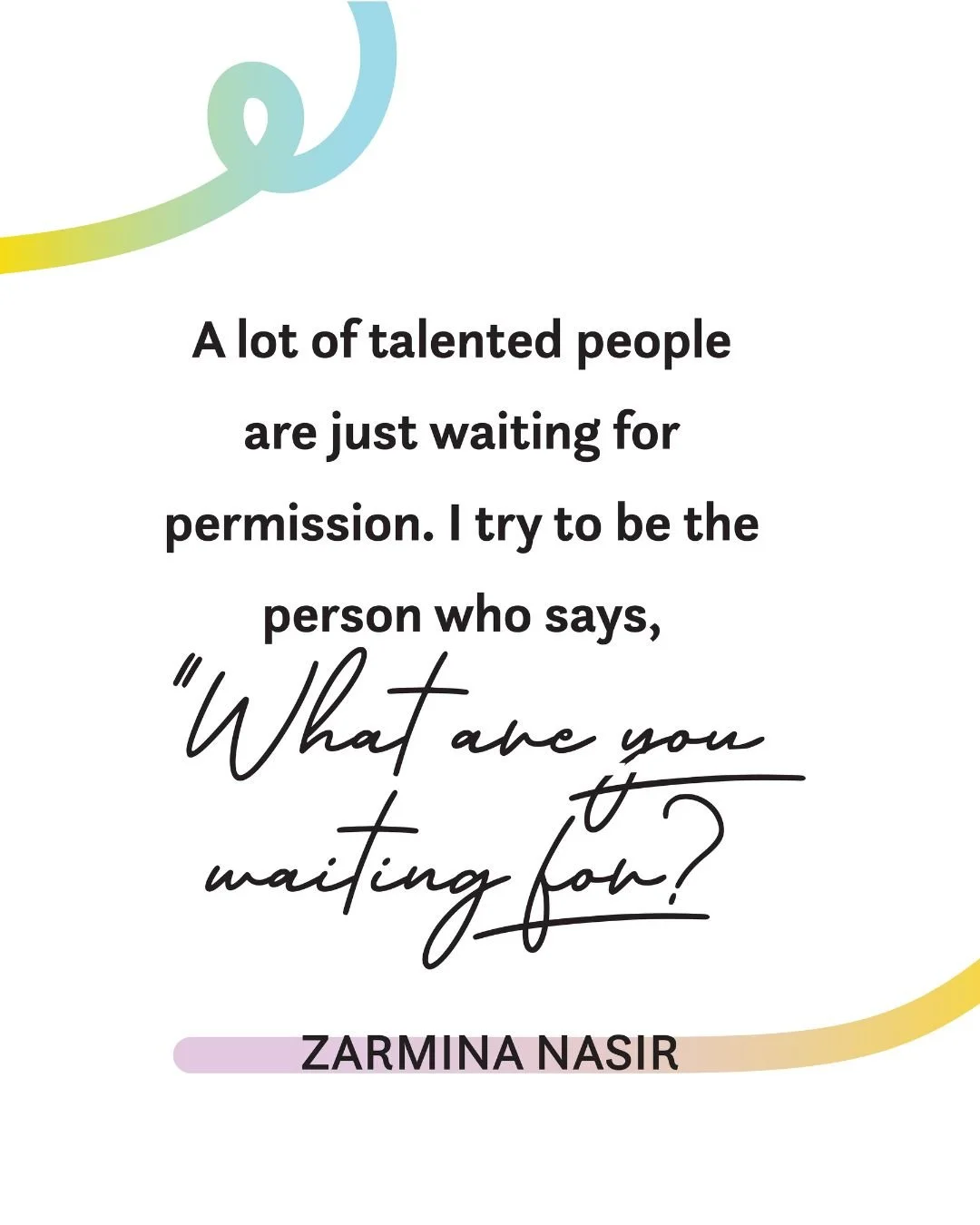
And then there's what I call the tap on the shoulder. I knew I was holding myself back. It took one person saying, "What are you waiting for?" before I changed. I try to be that person for the people I work with now. Not because everyone needs pushing, but because a lot of talented people are just waiting for permission.
What advice would you provide to your younger self or those earlier in their career?
I try not to use the phrase "what I'd tell my younger self" too much, because I genuinely believe every experience, even the hard ones, has shaped me. But I would say: don't underestimate yourself for as long as I did.
Don't wait for the tap on the shoulder. Put your hand up in a way that feels comfortable, and stretch yourself. You don't have to have everything figured out first.
And find people you can think alongside. Not necessarily a formal mentor, though that can be valuable. I'm often inspired by my direct reports. My peers matter to me enormously. What you need are people who help you figure out where you're best placed, what you enjoy, and where you can contribute.
The job market will look the way it looks, partly because of choices people like you make about how to show up in it. Start shaping it from where you are now.
