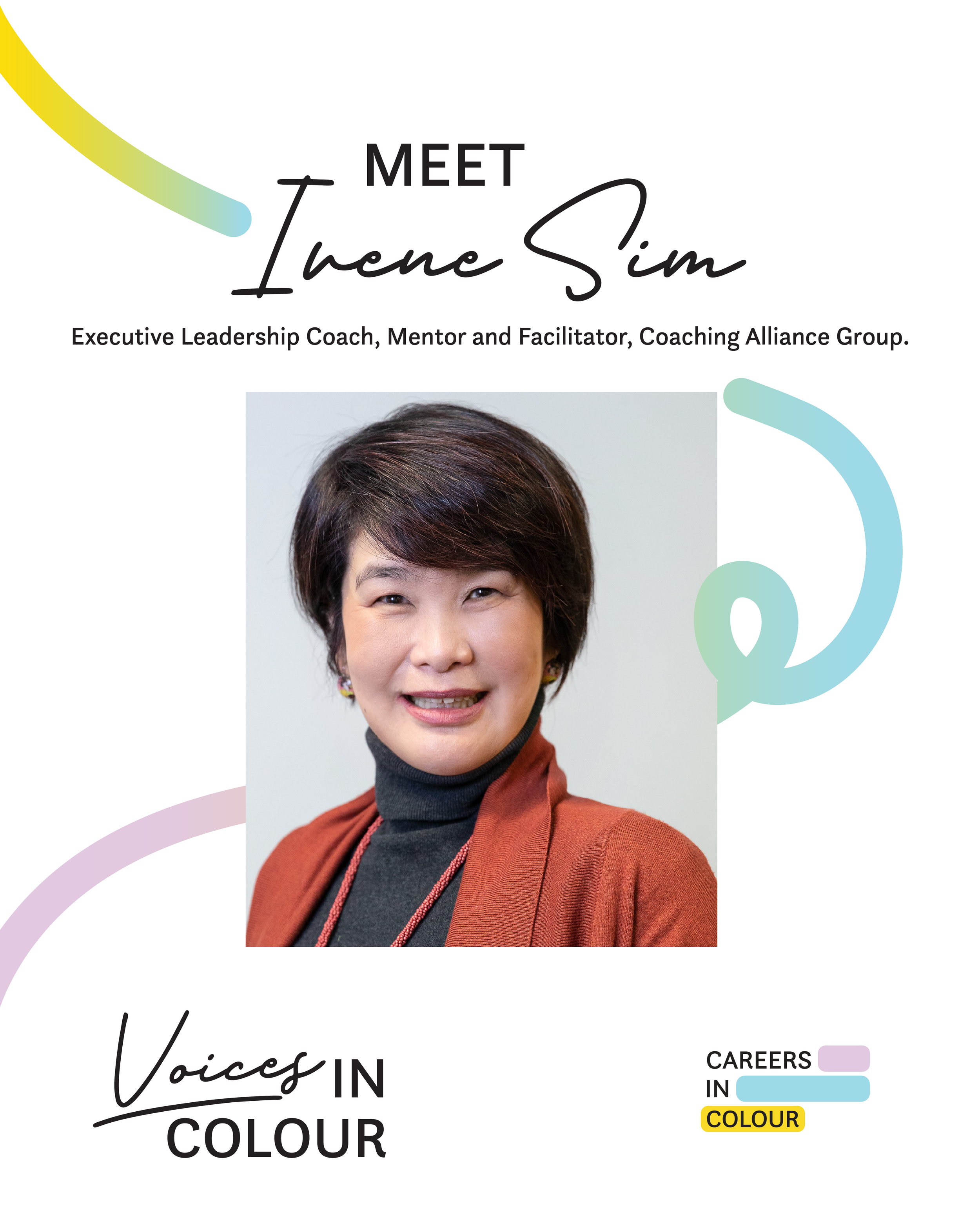
Irene Sim
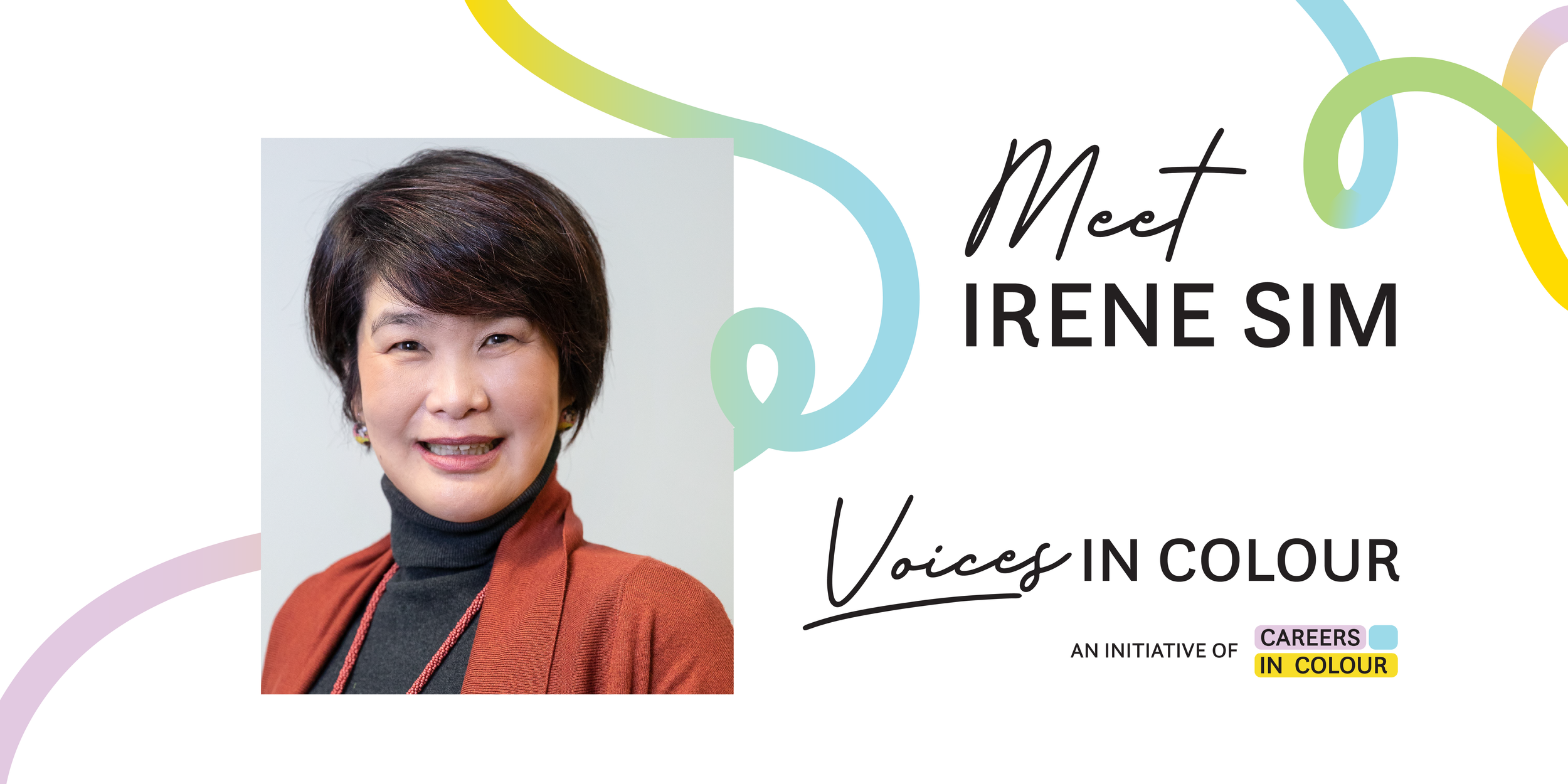
Voices in Colour is a storytelling series by Careers in Colour, grounded in the belief that every career carries a story. Through these conversations, we spotlight the voices, experiences and insights of People of Colour (POC) navigating the workplace.
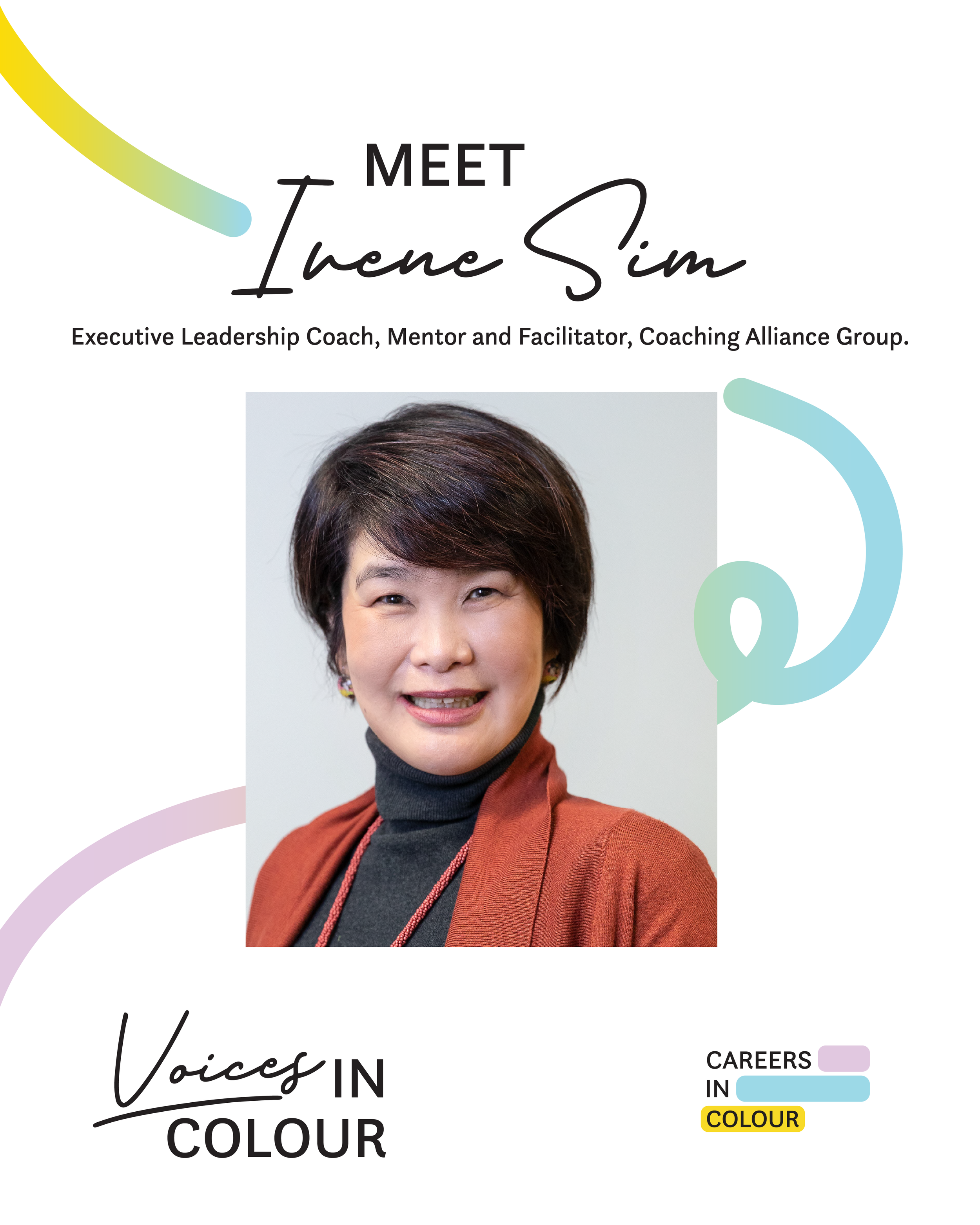
In this Voices in Colour profile, we’re excited to spotlight Irene Sim - Executive Leadership Coach, Mentor and Facilitator, Coaching Alliance Group.
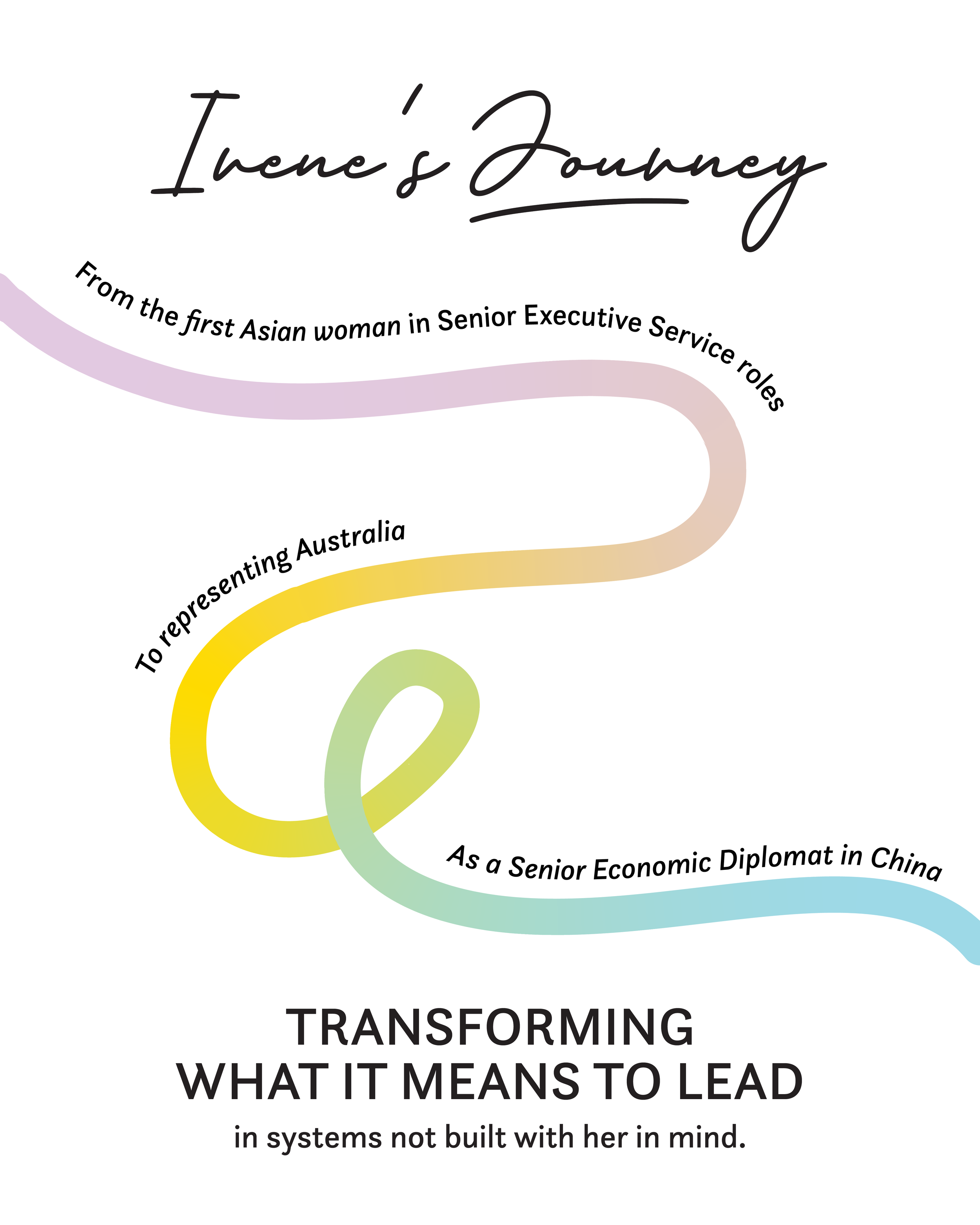
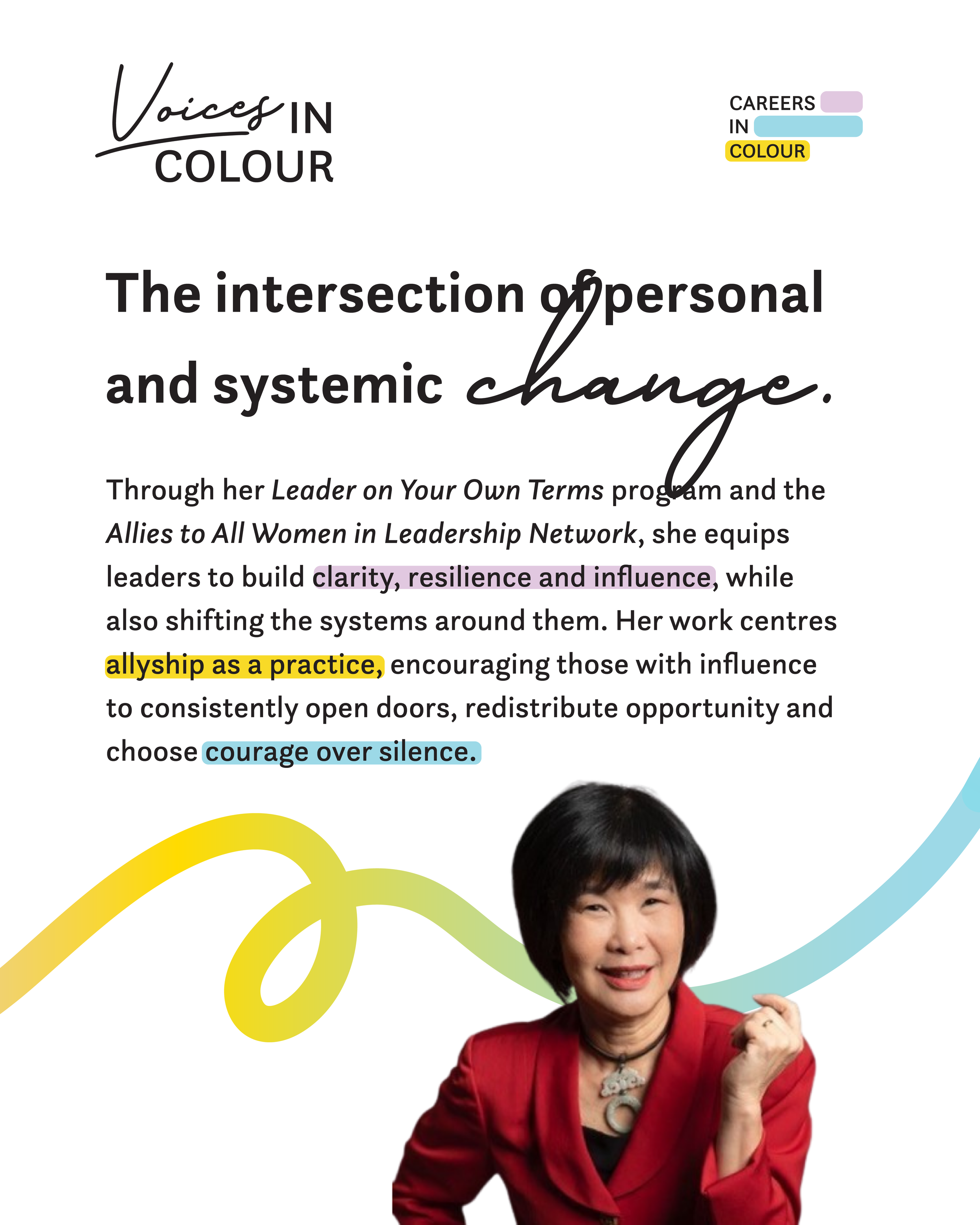
From breaking barriers as the first Asian woman in senior leadership roles in the Australian Treasury and Australian Taxation Office, to coaching the next generation of women leaders, Irene’s career is defined by courage, authenticity and impact. Drawing on her lived and professional experiences, Irene’s current work as an Executive Coach now focuses on helping women thrive, and lead, within institutions that weren’t built with them in mind.
You achieved multiple 'firsts'—first Asian woman in Senior Executive Service at Treasury and ATO, first Asian woman posted diplomatically by Treasury. When you think back to those early days through Treasury, what drew you to that world?
I didn’t grow up dreaming of becoming a senior executive. I didn’t have a grand career plan. What I did have was a strong DRIVE to use whatever influence I had to make things better and fairer, and to pay forward the opportunities and support that had helped me along the way.
I’d spent much of my life being an outsider, even before migrating to Australia. As a member of a minority ethnic group in Malaysia, and later as an immigrant woman here, I was often navigating systems that weren’t designed with people like me in mind. That gave me a deep awareness of power, fairness, and whose voices get heard.
What first drew me to Treasury was the opportunity to work on policy issues that improve people’s lives at scale, anchored in service, my values, and the impact I could have. Over time, as I worked inside those systems, I realised I didn’t just want to succeed within them — I wanted to help shape them. I wanted to use my experience as an outsider and pioneer to influence how those systems worked for others. Looking back, the milestones were never the goal. It was always about taking one step at a time, led by my values and impact, and contributing something meaningful along the way.
You talk about having broken through both 'glass and bamboo ceilings.' What does the bamboo ceiling feel like compared to the glass ceiling? How are they different, and how did you recognise you were navigating both?
For me, the glass ceiling and the bamboo ceiling were NOT separate experiences but rather, they were layered on top of each other.
The glass ceiling felt like invisibility. I’d be in rooms where I contributed ideas, raised concerns, made suggestions, and it was as if my words just disappeared into the air. At first, I told myself, I just need to communicate better. I need to work harder. But after a while, a deeper question crept in: Am I being taken seriously? Am I even being seen?
At the same time, I started recognising the bamboo ceiling — even before I knew the term. The moment that really stopped me was when I received feedback that I was “too deferential.” When I reflected on that, I realised I was carrying deeply ingrained assumptions about hierarchy, respect, and authority. I was waiting to be invited to speak. I was softening my voice. I was holding back disagreement. Not because I lacked capability, but because I’d learned early on that being respectful meant not taking up too much space.
What I came to understand is that both ceilings operate externally and internally. Externally, there are real systemic biases I couldn’t control. Then by internally, I’m referring to the invisible rules I had internalised just to survive and belong. The turning point was when I realised this: I can’t control how others see me — but I can choose how I show up.
When I started making different choices about my voice, my presence, and how I held my authority, people responded differently. The room shifted. And that’s when I saw how individual leadership choices I made didn’t just change my trajectory; they started influencing the culture around me.
To me, breaking ceilings is about changing what becomes possible for the people who come after me.
As Minister-Counsellor in China, you were Australia's senior Treasury representative across three territories. What was that experience like? What did it teach you about leadership, about diplomacy, about yourself?
Walking into that role, I remember thinking: this isn’t just my appointment — it represents something much bigger than me.
It was a huge honour, and at the same time, I felt the weight of responsibility. I was the first woman and the first non-white person to hold that position. I didn’t know exactly what to expect — but I did know this: I wanted to make sure the door stayed open for others like me who would come after me.
This experience proved to be the most invaluable of my career.
I went in assuming I needed to fit a very traditional mould of what an “Aussie” senior economic diplomat looks like. Instead, I learned that my so-called “difference” was my X-factor. Being Asian and ethnically Chinese gave me cultural instincts around relationship-building, nuance, respect, and face. That helped me connect with Chinese counterparts with empathy and credibility.
This was before we saw visible Asian representation at the very top of Australian politics. Then my appointment itself sent a quiet but powerful signal about what modern Australia looks like. That mattered because trust isn’t built just on policy expertise. It’s built on human connection. What this experience taught me about leadership and diplomacy is that beneath geopolitics and negotiations, there’s a shared desire on both/all sides: to be understood, to be respected, and to find win-win outcomes.
And what it taught me about myself is that the moment I stopped trying to look like a stereo-typical “Aussie leader” and started leading as MYSELF, I didn’t just represent Australia more authentically, I helped expand what leadership looks like for the next generation.
As the inaugural Chief of Staff at APEC, you were designing systems and career pathways for diplomats. What did you want to be different based on what you'd experienced yourself?
That role was incredibly meaningful. It was not about just operating inside a system — I was helping to design one.
Part of my responsibility was to engage diplomats from 21 different member economies working within the Secretariat. Through many conversations with them, I became very clear on one thing: regardless of their cultural background, people wanted their contributions to be recognised, in ways that would genuinely support their longer-term career pathways.
Based on my own earlier experiences of feeling unseen at times in large institutions, I was very intentional about this. I wanted to design structures that recognised people for the value they brought to the international team. That is, their expertise, collaboration, leadership behaviours, and particularly pertinent for an international organisation, their ability to connect cross-culturally.
I focused on building systems around recognition, development opportunities for connecting across cultures, and visible and impactful contribution. I created pathways that allowed people to demonstrate impact in ways that travelled with them beyond their time at APEC. Because when you design systems that recognise people properly, you don’t just develop talent — you reshape who gets to succeed.
After being Chief of Staff at APEC, you became a coach. What sparked that transition? What were you moving toward?
The transition started with me coaching myself.
As I contemplated what was to be my next career move after APEC, I took time to really reflect on my own leadership journey, not just what I’d achieved, but what made me feel fulfilled, accomplished, proud, and energised at the end of the day. I loved policy work. I loved shaping systems. But what I truly loved most, were when I helped people especially women, and anyone who felt they didn’t belong, to see what they were capable of, to truly see themselves, and to take courageous action beyond what they thought was possible. These were the moments that stayed with me most.
I was also reminded of something else. Along the way, I’d been incredibly fortunate to have leaders who believed in me, who opened doors, who challenged me to stretch. I wanted to pay that forward. I also had coaches of my own, and I’d worked with Lifeline. Those experiences showed me the power of deep listening, presence, and asking the right questions. I saw firsthand how coaching doesn’t just give people answers — it helps them reconnect with their own inner wisdom and strength.
Looking back now, it feels like everything that came before in my leadership journey so far, my challenges, my wins, was quietly preparing me for this next chapter.
That’s when I knew this wasn’t just a career change — it was a calling.
You write about understanding 'the visible and invisible pressures that come with being the only one in the room.' Now that you're coaching other women through those same pressures, what do you see? What patterns emerge?
When I talk about being the “only one in the room,” I’m not speaking in theory — I’ve lived it. I’ve been the outsider. In many ways, I’m still one. Being the first Asian woman in senior leadership roles shaped how deeply I understand these pressures. And now, as a coach, I see the same patterns showing up repeatedly.
There are the visible pressures: heightened scrutiny, feeling like you’re being watched more closely, knowing that mistakes can feel amplified, and carrying the unspoken sense that you’re representing more than just yourself.
But the invisible pressures are often heavier. I see women second-guessing themselves, over-preparing to prove they belong, softening their voice to avoid being labelled difficult. And I always tell them, “I’ve been there too”. I know what it feels like to carry that constant internal negotiation.
One of the most common patterns, especially for women of colour, is the tension between belonging and becoming. How do I stay true to myself without risking exclusion? How do I lead boldly without being punished for it? That’s why I often say to my clients: practice getting comfortable with being uncomfortable. Growth, visibility, and influence rarely come from playing it safe.
I also see that women carry a lot of emotional labour. I see women becoming cultural bridges, managing dynamics, smoothing tensions, carrying responsibility for inclusion, often without recognition. What gives me hope is that once women become conscious of these patterns, something shifts. They stop telling themselves that everything is a personal failure, when so much of it is shaped by the system around them. They start choosing their response. That’s when being “the only one” stops feeling like a burden and starts becoming a platform for leadership impact.
The goal isn’t to blend in anymore. It is to belong without shrinking.
You created the 'Leader on Your Own Terms' program and founded the Allies to All-Women in Leadership Network. Tell me about those. What gap were you trying to fill? What weren't you seeing in the existing leadership development space?
I created both because I realised something fundamental. That the definition of leadership itself needed to expand. Real change doesn’t happen in just one place. It must happen inside leaders AND inside systems at the same time.
What I kept seeing in leadership development was a big gap around the inside work relating to identity, emotional intelligence, confidence, voice, values, and purpose. Talented women and people from underrepresented backgrounds were navigating tough environments without the internal tools to stay visible, grounded, and resilient.
I created my Leader on Your Own Terms Programs to help leaders clarify their vision, build emotional strength, grow influence through voice and social capital, and learn how to stay connected through conflict and uncomfortable conversations. In my experience, that’s where leadership is really tested.
The Allies Network came from another gap I couldn’t ignore. We were putting too much responsibility for change on women alone. And that’s not how systems shift. Cultural change accelerates when leaders with power in existing systems actively use their influence to expand what leadership looks like, to treat inclusion as a core productivity driver. The goal isn’t to help women fit in but rather to reshape leadership so everyone can belong and lead without shrinking.
The Allies to All-Women in Leadership Network focuses on 'awkwardly courageous' allyship. I love that phrase. What does awkwardly courageous mean to you? And why is allyship so central to the change you want to create?
I use the phrase “awkwardly courageous” very intentionally. Members of the Network can attest that real allyship is rarely smooth or comfortable. You see, most of us have been conditioned, often unconsciously, to be good bystanders. To stay quiet. To NOT rock the boat. So, it can feel awkward the moment you choose to interrupt a biased comment, ask a different question in a meeting, or sponsor someone who’s being overlooked. Your heart rate goes up. You worry about saying the wrong thing. You feel the social risk.
But that’s exactly why it matters.
Awkwardly courageous means being willing to step into that discomfort in service of something bigger than your own comfort. This is real leadership. That’s why the Network’s tagline is driving inclusion one ally action at a time. Because systems don’t shift through big statements alone — they shift through everyday behaviours.
Allyship is central because individual success stories aren’t enough. Cultural change happens when people with influence consistently use it to open doors, redistribute opportunity, and change norms. It’s not about perfection — it’s about consistent, imperfect action. Choosing courage over silence. Again, and again.
You've navigated Australian government, diplomatic circles, international organisations and more. You've worked across cultures and continents. Based on everything you've seen and experienced, what do you wish more leaders understood about creating truly inclusive environments—not performative diversity, but real belonging?
If I had to distil it down, I’d say three things: curiosity, empathy, and compassion. Real inclusion starts with how leaders habitually relate to people.
Curiosity is about genuinely wanting to understand experiences different from your own, especially when someone doesn’t fit the “norm.” It’s asking better questions and noticing whose voices get heard and whose don’t.
Empathy is the willingness to see situations from another person’s perspective or point of view, not necessarily to agree with everything, but to create real connection across difference.
And compassion is what turns awareness into action. It’s what changes how leaders give feedback, handle mistakes, and use their power.
When those three come together, inclusion stops being performative. People won’t just feel invited into the room, they feel safe to belong, because they’re not constantly bracing themselves against judgement.
You're building the Coaching Alliance Group, running the Leader on Your Own Terms program, growing the Allies Network. When you imagine these ventures five years from now, what does success look like? What impact do you most want to have?
When I imagine these ventures five years from now, I don’t just see programs or networks, I see a different leadership landscape.
I see people of all colours and backgrounds walking into rooms with confidence, not because they’ve learned how to “fit in,” but because leading as themselves is simply what great leadership is understood to be. I see graduates of my Leader on Your Own Terms Programs at decision-making tables, shaping policy, leading organisations, mentoring others, doing it without leaving parts of their identity at the door.
I also see allyship becoming normalised. Not symbolic. Not performative. But embedded into how leadership is measured. I want leaders with power and influence to be known not just for what they deliver but for who they lift, who they sponsor, and how they create space for others to bring their best.
And through the Allies Network, I see a visible, global community driving inclusion one ally action at a time. I see Network members changing everyday behaviour, one conversation, one decision, one courageous moment at a time.
Ultimately, the impact I care most about is expanding the definition of leadership, so it no longer has one face, one accent, or one style but reflects the full colour, complexity, and potential of the diverse world we live in.
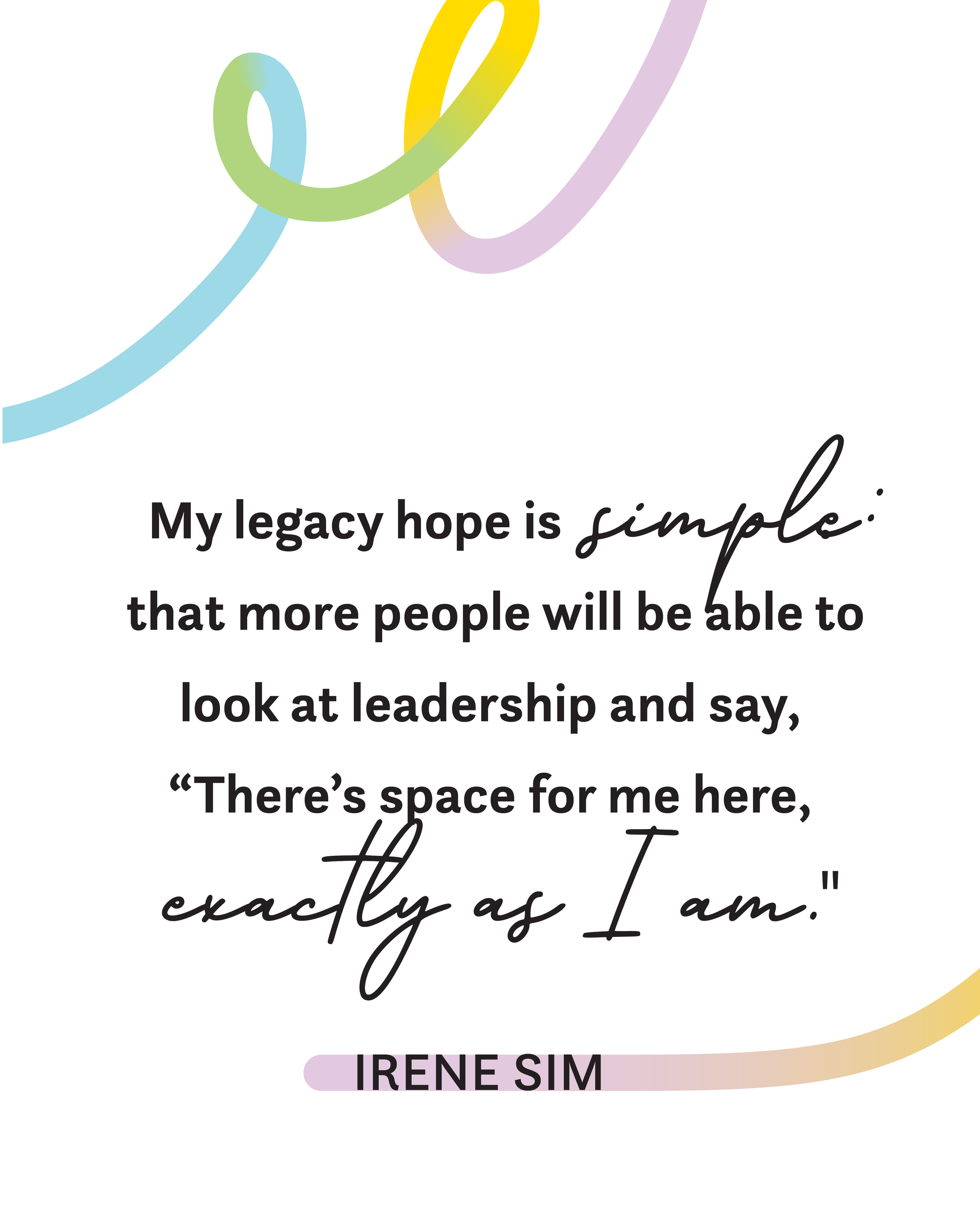
My legacy hope is simple: that more people will be able to look at leadership and say, “There’s space for me here, exactly as I am.”
