Malini Raj
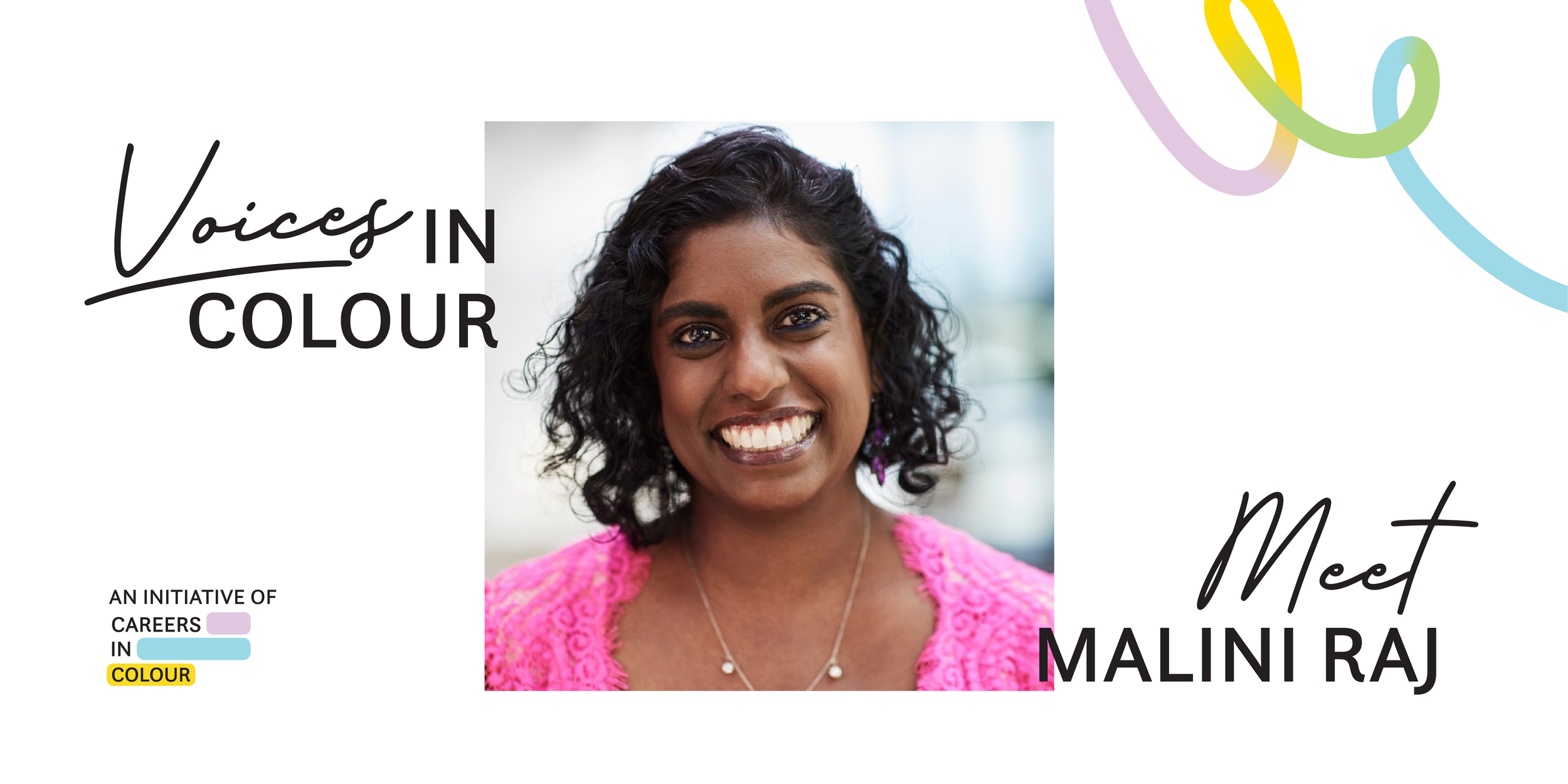
Voices in Colour is a storytelling series by Careers in Colour, grounded in the belief that every career carries a story. Through these conversations, we spotlight the voices, experiences and insights of People of Colour (POC) navigating the workplace.
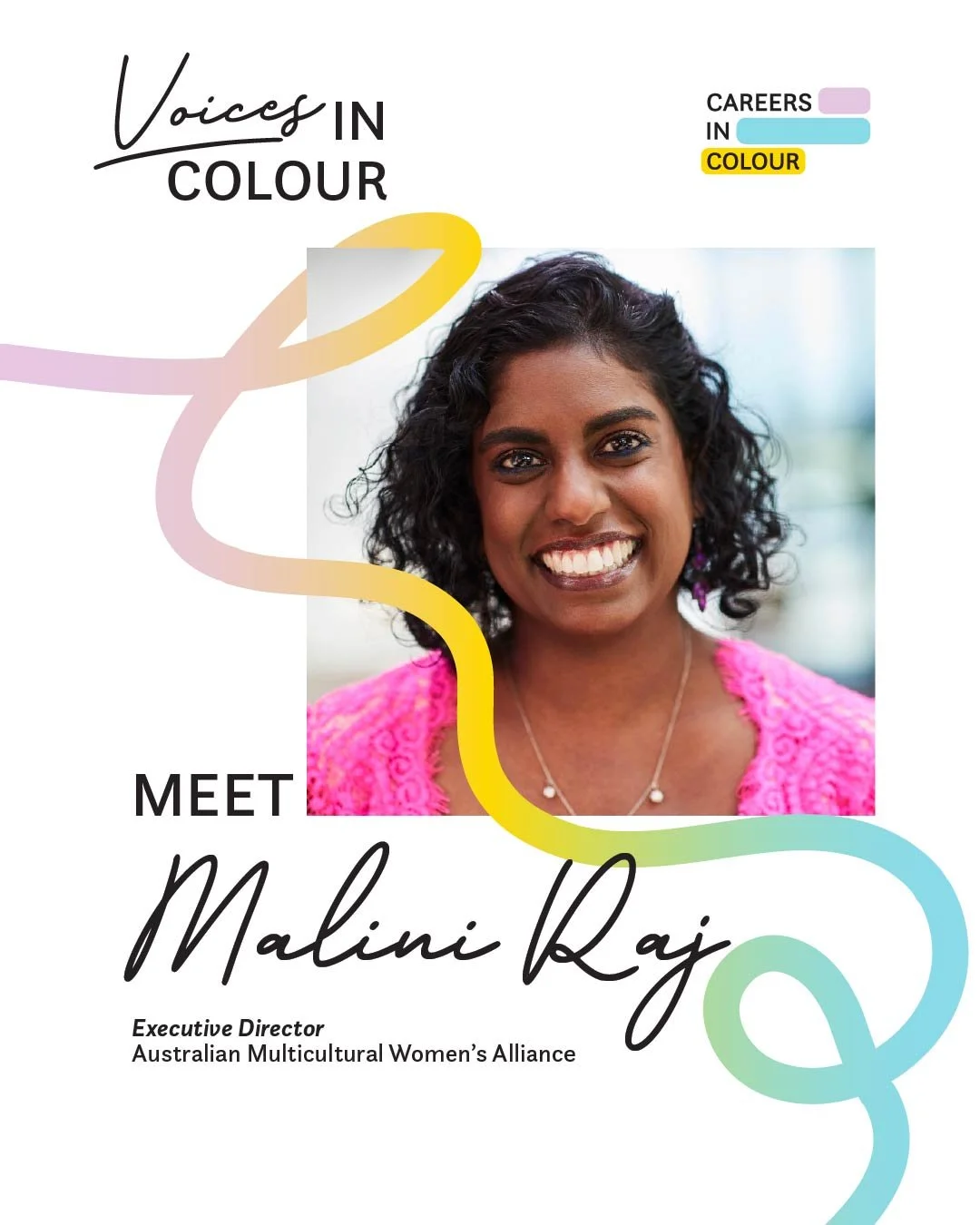
In this Voices in Colour profile, we’re excited to spotlight Malini Raj - Executive Director of the Australian Multicultural Women's Alliance (AMWA).
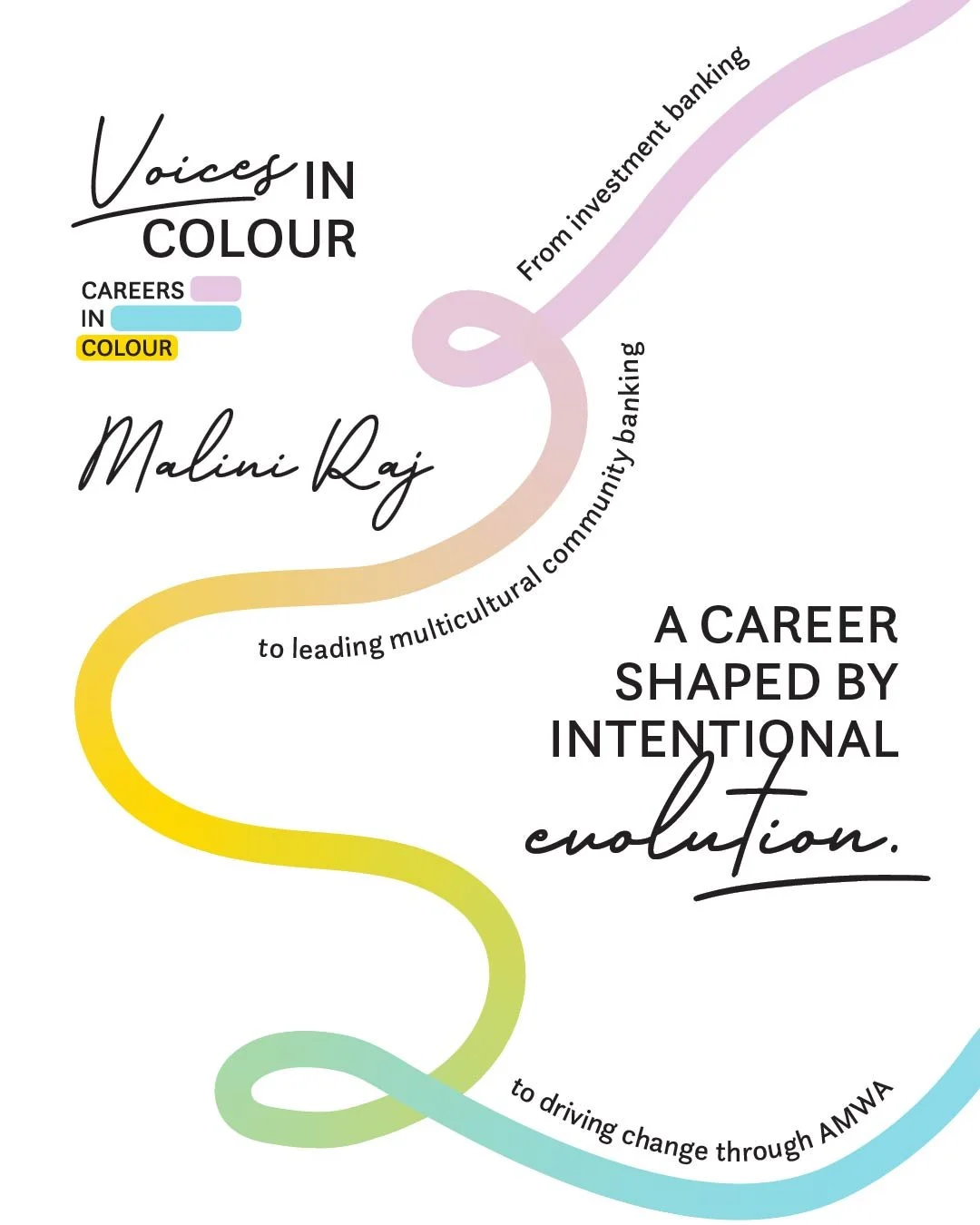
Malini Raj's career journey reads like a roadmap of intentional evolution. From the high-pressure world of investment banking at Citigroup to leading multicultural community banking initiatives at Commonwealth Bank, and now driving change through the Australian Multicultural Women's Alliance, Malini has consistently moved closer to work that aligns with her deepest values. Along the way, she mentored over 300 women and created Australia's first corporate hijab, proving that one person listening to one person can create ripple effects of change.


You started in investment banking, doing M&A deals and IPOs. What drew you to that world, and what did those early days teach you?
When I was in high school and university, economics and business really interested me. Investment banking seemed exciting—fast-paced, intellectual, challenging. My first role with Citigroup included training in New York. Also, being a woman in that space, there were hardly any women doing it back then. I wanted to prove that I could thrive in spaces where people who looked like me weren't typically represented.
That role taught me a lot. The hours were very long, often midnight on a good day, often overnight and weekends. It wasn't the best for my health, but it taught me I could handle pressure and complexity, solve problems, engage with people at different levels. The networks I met are friends for life.
But it also made me feel like the technical aspects and focus on money didn't totally align to my values of connecting with people or something bigger than just always going after the next deal. I felt like there was something more in terms of impacting equity in community. That was the beginning of it.
Where did those values come from?
My dad was very involved in the community, in the Rotary Club. My mom was always volunteering, helping people. She was really kind, always giving back. I was taught those values.
I realised I'm not driven by money, status, or stepping over people to get where I want to get to. That became apparent, that maybe I didn't fit totally into that world.
How did you make the shift toward multicultural community banking?
It was an evolution. After investment banking, I went to a smaller corporate finance firm because I wanted to be closer to where the work is, where the people are. Then I moved to Westpac and started getting involved in committees outside of work such as diversity and inclusion, employee networks. That slowly gave me a taste of equity and inclusion work.
As I moved through different roles, I got closer to the customer, and it got more satisfying because I was doing things that helped real people, everyday people. When I got to CBA, a role got set up called multicultural community banking—that combined my passion into one. That's where I really got involved in community engagement, bringing lived experience into the bank to provide access to banking for underrepresented groups.
You've also become deeply involved in boards and community work. Did you worry it might hold back your career?
When the Royal Commission happened and the banking code of practice came out, there was more appetite for these kinds of roles. Vulnerability became key, making sure people in vulnerable circumstances have equal access to banking.
It gave me energy being around people who had aligned values. Giving back and the satisfaction of knowing you're doing something for somebody else—that really drives me, probably to my detriment sometimes. You can get so caught up in saying yes to everything at the expense of your own well-being.
But when community organisations need help and it's literally going to change someone's life, like helping someone in a domestic violence situation, I find it very difficult to say no. I do my day job, then my night job, then my weekend job. Balance is important, though sometimes it doesn't feel like work.
You've mentored over 300 women. What have you learned from these relationships?
Talent is everywhere. There's so much talent at the grassroots level. So many people have amazing skills, abilities, experience, but the talent's there and the opportunity isn't.
It's really important in mentoring to reflect people's potential back to them, challenge their limiting beliefs. A lot of it is negative self-talk: "I'm not good enough, I can't do this, I'll never get hired." It's about being a sounding board, walking beside them as they step into their courage. Leadership isn't about the title. People remember how you make them feel.
I learn so much, they mirror behaviours I have as well. I have negative self-talk, think I'm not good enough, and constantly compare myself to other people. Everyone has it at any level. I just don't see any hierarchy. With multicultural women especially, it's about being an advocate for them in rooms they're not in.
Many people struggle with feeling like they need to change themselves to fit in. What's your view on this?
People shouldn't change themselves. The system is broken. There are systemic and structural barriers that impede us getting equity.
The fact is we're starting on the back foot. We don't have the same privilege in terms of education, background, and intergenerational wealth. We have intergenerational trauma that our counterparts don't have.
I knew people in investment banking who changed to fit in. They're not the same person. My dad changed his name. But now I'm trying to advocate for the system and structural barriers to change.
You're unique and perfect as you are, every single person. The system needs to celebrate that. It's exhausting trying to not be yourself. My message would be: do not change yourself under any circumstances. That may mean you don't get an opportunity or you're told no several times, but in the end you'll land somewhere where you're supported, accepted, and valued as you are.
I know we all want to fit in. Belonging is fundamental. I used to try to wash my skin off. You want to be white, you want to be the same. But who says the white Western structure is correct? Why is that the gold standard?
What do you want to be remembered for?
Everyone can make a difference. A lot of people think, "I can't make an impact because I'm just one person."
The corporate hijab is an example. One of my friends told me in passing she wasn't going to wear her hijab anymore because she felt her employment opportunities would be jeopardized. This was around the Lindt Café siege, there was Islamophobia everywhere. I went to branches and saw staff wearing hijabs get abused by customers.
I listened to them and said, "What if we did a corporate one?" I got an email afterward saying no one had ever come and listened to them, that I made them feel valued and supported. We worked over 18 months. They designed it themselves and we got it launched. We were the first corporate to produce one. Other corporates followed suit.
But that was only because I listened to one person. I only wanted to help her. That's one person helping one person, but it ended up having a ripple effect.
Change doesn't have to be at scale because it will be at scale because of the ripple effect. If someone helps one person and that person goes home in a better mood for their kids, their kids have a better day. You don't know how much impact you can have.
Don't feel like you don't matter or don't have skills or the other person's better than you. Be yourself, because everyone else is taken.
