Voices in Colour is a storytelling series by Careers in Colour, grounded in the belief that every career carries a story. Through these conversations, we spotlight the voices, experiences and insights of People of Colour (POC) navigating the workplace.
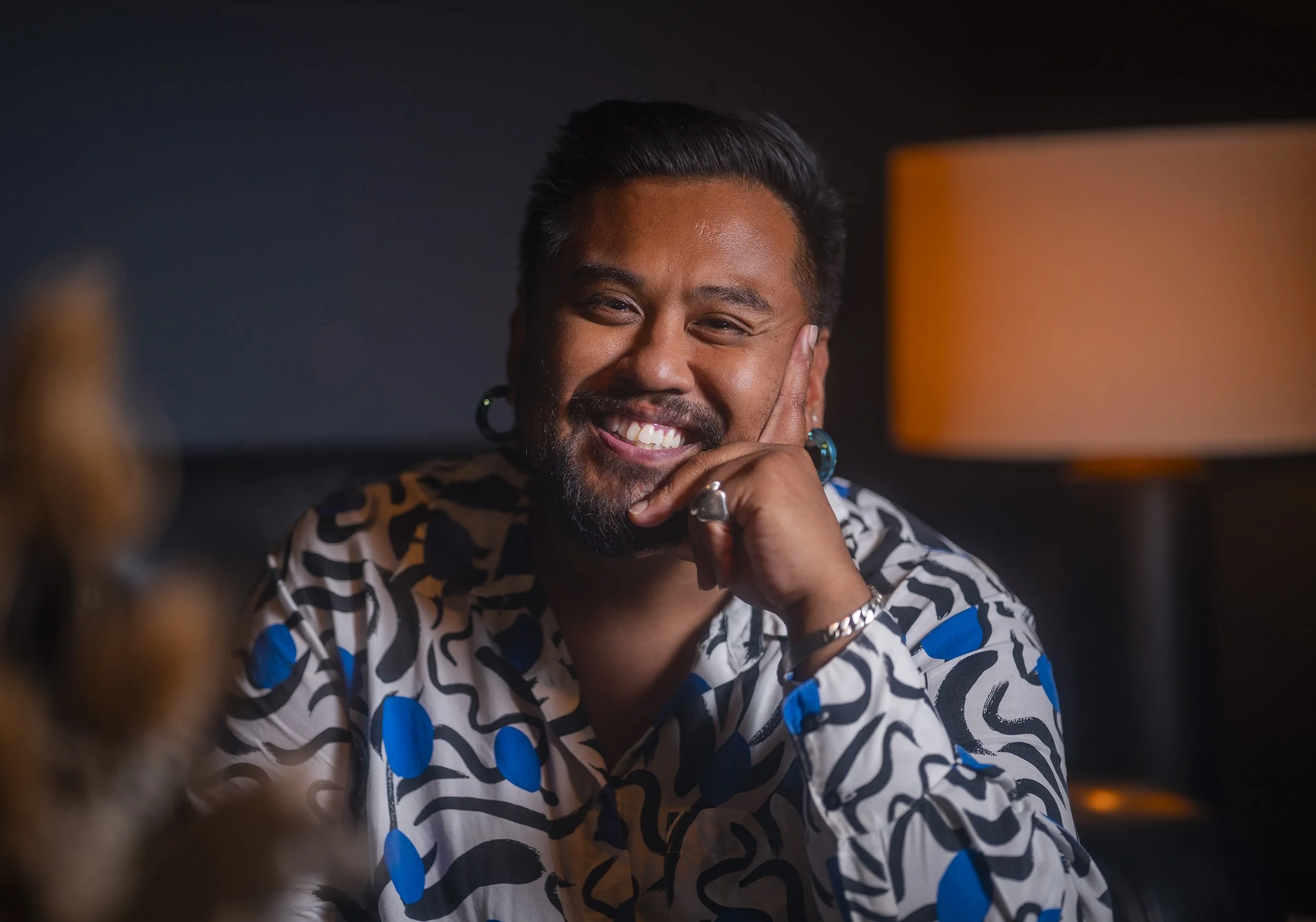
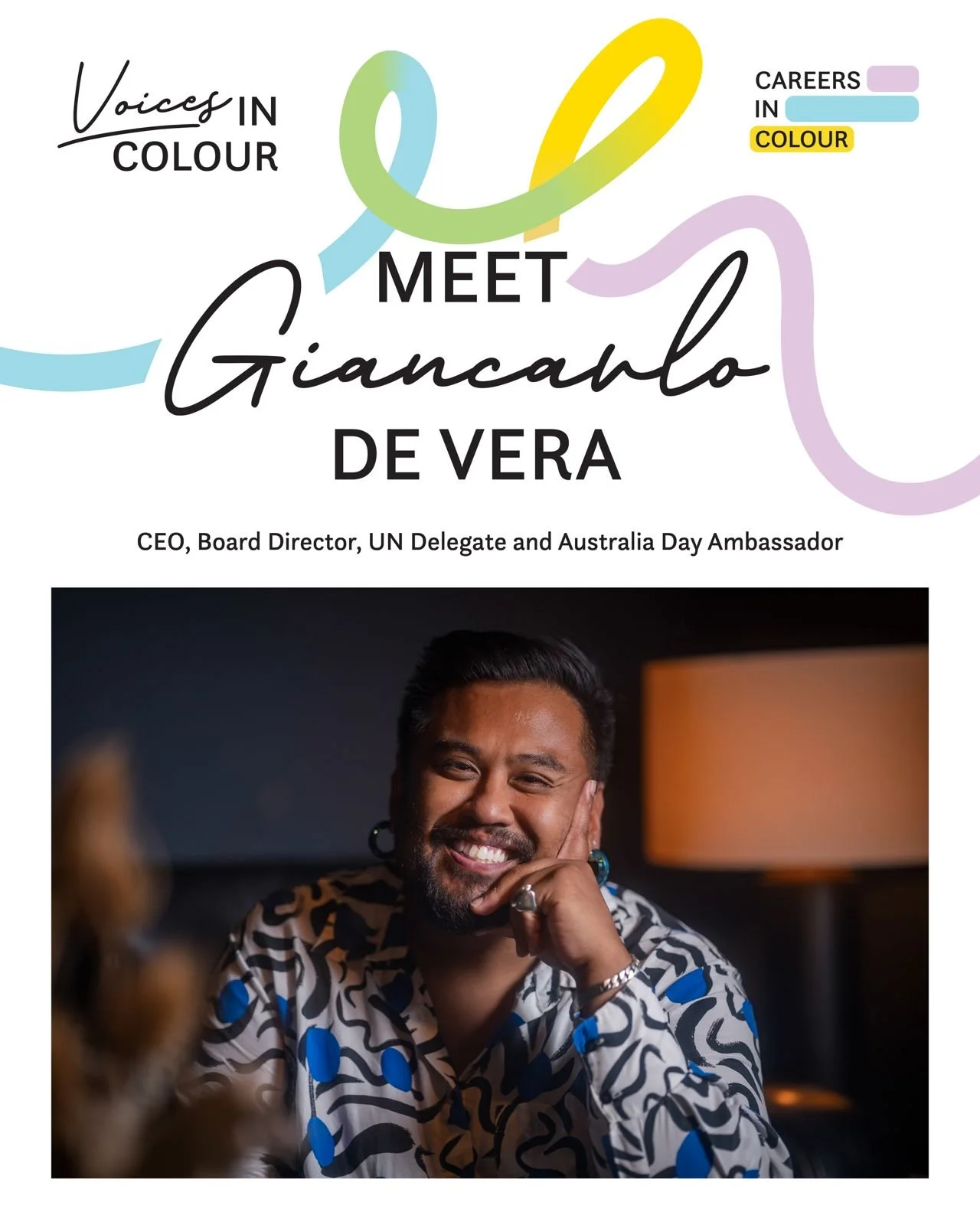
In this Voices in Colour profile, we're excited to spotlight Giancarlo de Vera.
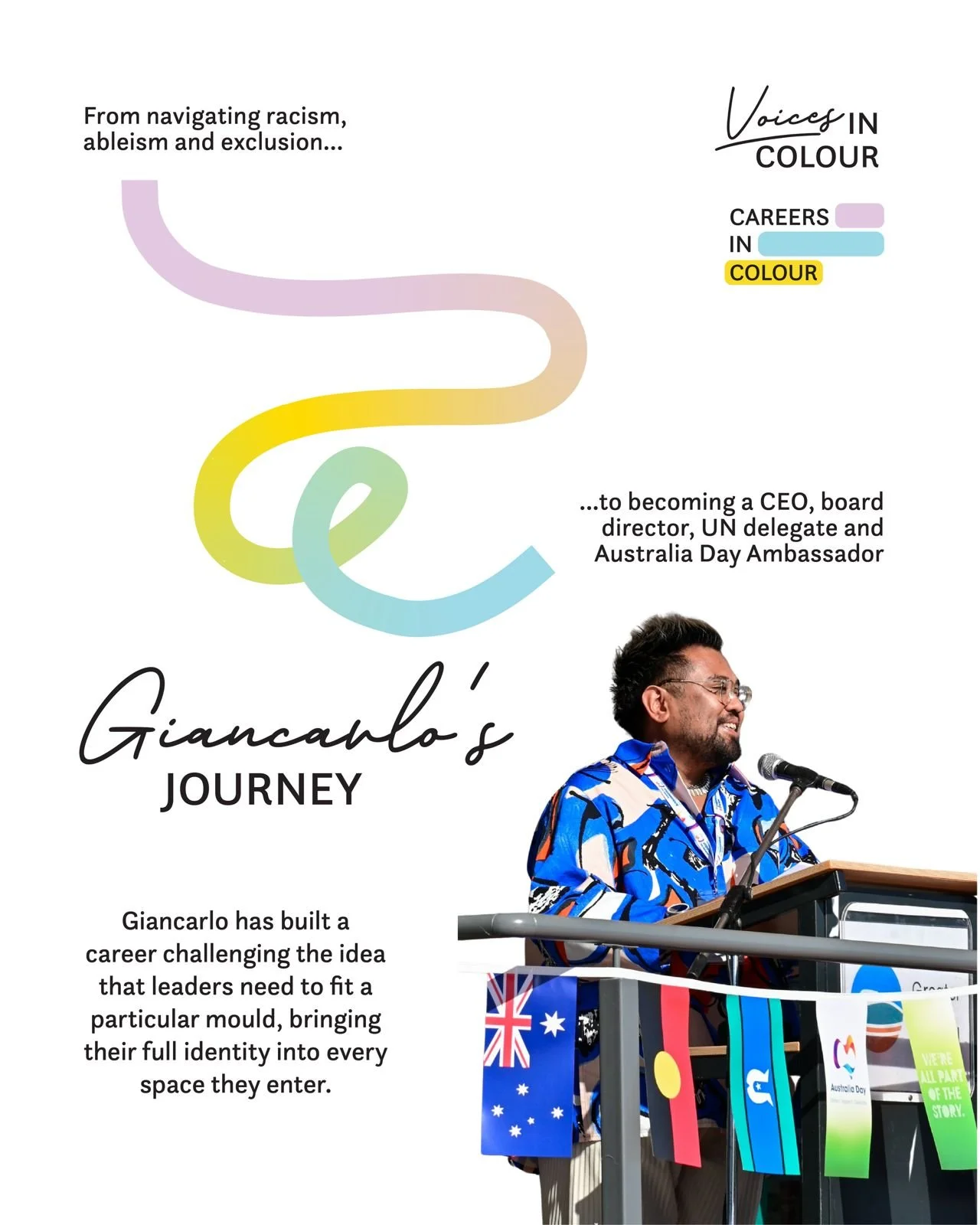
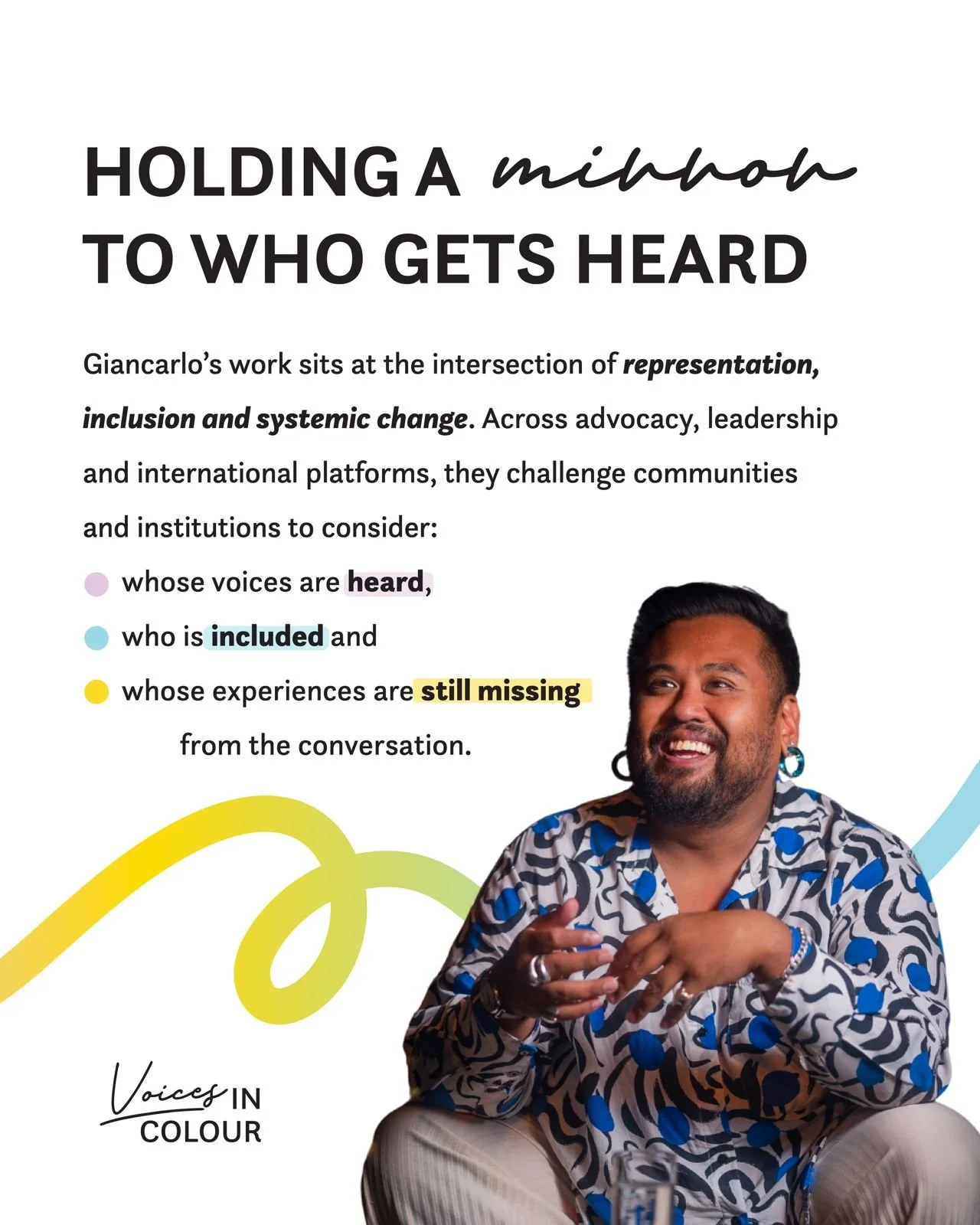
Giancarlo de Vera's journey hasn’t been linear. CEO, multiple board roles, UN delegate, and Australia Day Ambassador from 2026, Giancarlo has represented Australia on global stages while championing voices that often are unheard. What makes their story remarkable isn't just the accolades or recognition as one of Australia's most influential Asian Australians under 40. It's how they show up: authentically queer, non-binary, disabled, neurodivergent, and from a racially and culturally marginalised background. In a world that often demands we choose which part of ourselves to present, Giancarlo insists on bringing all of it and shares with us why that matters.
In your recent Occasional Address for graduates at UNSW, you shared that it took nearly a decade to graduate because you had to put life first while navigating diagnoses related to psychosocial disabilities. What did that journey teach you about yourself?
That period really highlighted the embedded sense of ableism, not just in society, but also within myself internally. My first barrier to what I would call disability pride now was that really strong sense of internalised ableism. When I thought of disability growing up, it was definitely not me. It was someone in a wheelchair, someone who was probably white and didn't have my lived experiences.
I already had a disability when I acquired those diagnoses related to my psychosocial disability, but it was a very different experience. Growing up neurodivergent in the '90s, there wasn’t enough understanding for my parents and people who supported my family to provide what they would call early interventions. The whole point of interventions is to ensure there’s opportunity for developmental milestones to be met in what society would consider normal. So I learned how to come across as not neurodivergent.
You identify as queer, non-binary, disabled, neurodivergent, and a leader from racially and culturally marginalised backgrounds. How have you managed those intersections as you've grown into adulthood?
It started off as what felt like trying to figure out what felt safe. With all those identities I held, there were a lot of spaces where I didn't feel safe. I definitely experienced racism and ableism in the workplace. So it was really trying to find workplaces and careers that supported me to feel safe.
But once I had the confidence and conviction that not fitting in was actually a strength, it became about taking on the mantle of being authentic in all those identities. That's a logical progression. If you've said there's value in not fitting in and there's untapped potential in diverse ways of thinking and being, then there's a responsibility to show up authentically.
That really showed up firstly in my queerness. That was the first thing where I was like, I'm here, I'm queer, I'm proud. That was at the same time as the marriage equality debate whereI graduated in 2014, only a few years before the plebiscite.
The disability pride came through a long journey. It was concurrent with settling on my support needs around my psychosocial disability, which took like a decade. Once I felt really comfortable that I had the supports around me, I was able to feel and experience pride for the first time in my disability. I was able to then show up authentically with that.
But funnily enough, I think the race component came last. Which I think is a testament of its own in where we are as a country. I think about strides in social progress in Australia—disability's got a foothold, gender's got a foothold, LGBTQ's got a foothold. But race hasn't.
There's still this real sense of we're not Australian as people of colour in Australia, even though we are all Australians. There's a real narrative that you're your diaspora community first, and then you're Australian second. That's something I started to grapple with. I was like, well, no, I'm bloody Australian. My roots have been here forever and my family's been here for a very long time since the White Australia policy got dismantled in 1973.
It's shocking to me that we haven't had that race conversation as a country and that manifests in so many ways in society—in leadership, in the bamboo ceiling, and even in diaspora communities' tendency to seek safe careers and not really look beyond traditional career paths because we're seen as our diaspora first and not Australians first.
If diversity is something we want to harness, and the strength of the human condition is diversity, then we have a responsibility as society at large, but also communities of colour, to say that the strength in the diversity of the human condition needs to be equally weighted. If we've had strides in gender diversity, then why haven't we had strides in gender diversity for women of colour? If we've had strides in disability inclusion, why can't we have queer disability inclusion at the forefront too? To be intersectional means we're lifting up everyone at the same time and that benefits everybody.
You've represented Australia at the United Nations (UN) multiple times. What was one moment that really shaped you, and what voices were you trying to carry into that forum?
I wanted to carry the voices of the communities I'm part of. A lot of the work I did at the UN was around disability rights and disability inclusion. There was a clear gap in intersectional approaches to disability. A really good example was the rights of LGBTQI people with disability whereI was constantly the only person at the UN who would host events for people to talk about that intersection.
That goes back to what I was saying earlier: we need to lift up all these marginalized people to lift each other up effectively as a whole. It's funny because when people hear "the UN," they think, "Wow, you must be really confident." But I would ebb and flow into not even feeling confident at the UN.
You're an Australia Day Ambassador from 2026. What do you want to use that ambassadorship for?
Before I accepted the Australia Day Ambassador role, I really thought long and hard around it because obviously the day itself has complexities around the history of our First Nations people. But I decided to accept the role because I wanted to champion the voice of people who continue to remain voiceless.
A key part of being a voice for those who remain voiceless is holding a mirror to society and having the conversation around the ways in which we continue to not allow the voices of those who are voiceless to come through. That's something First Nations people experience today, that's what a lot of people in the communities I'm part of experience daily.
